September has a strange kind of gravity online. The summer feeds quiet down, everyone resets their routines, and within a week or two a handful of new formats start showing up everywhere at once. That is exactly what is happening right now, on September 2, 2026.
If you create anything for the internet — a brand account, a newsletter, a small business page, or just a personal profile you actually care about — these are the five trends worth knowing about this week. None of them require a studio, a team, or a budget. All of them reward being early.
1. “Gold Star Behavior” Is the Feel-Good Format of the Month
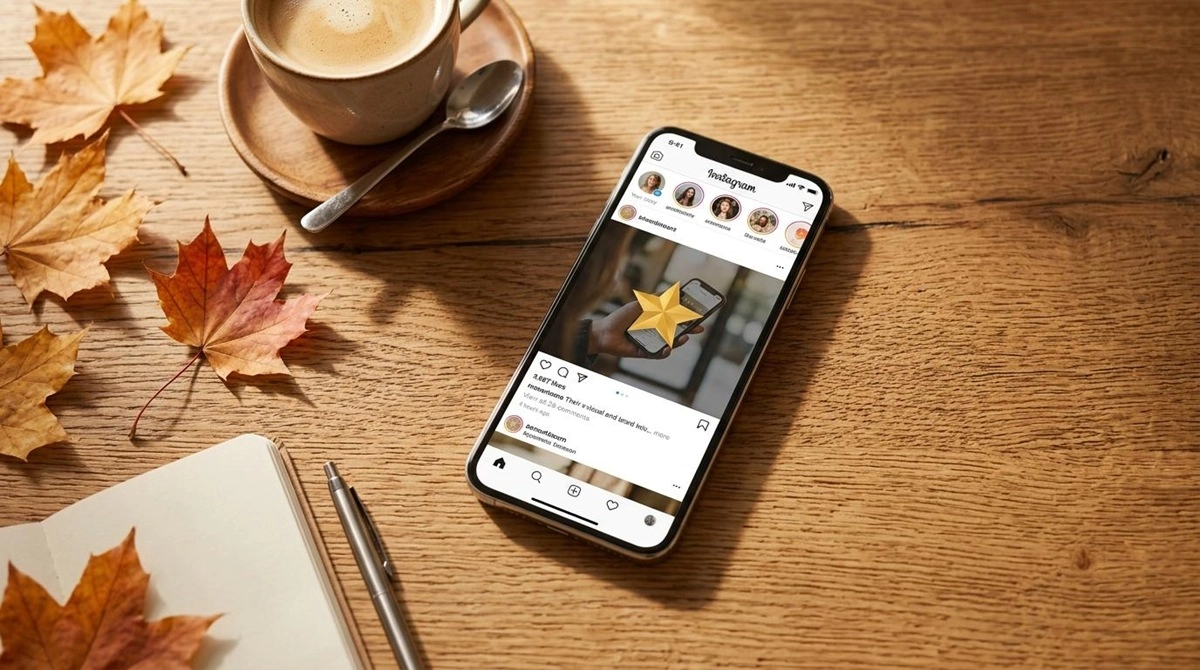
The breakout trend of early September is deceptively simple: a plain photo, a text overlay reading “Gold Star Behavior,” and a scattering of little gold stars over the top. Underneath it, creators list the small, unglamorous things they think deserve credit — leaving a party early, replying to the message instead of overthinking it, cooking the vegetables before they turn.
It works because it is the opposite of aspirational content. Instead of showing a life nobody can reach, it celebrates the version of yourself that just barely got through Tuesday.
How to make one in five minutes
- Pick a photo that is calm and slightly boring — a made bed, a kitchen counter, a walk.
- Add the words “Gold Star Behavior” in a clean sans-serif font, top or center.
- Scatter three to seven star stickers or emoji across the frame, uneven and imperfect.
- Put the real content in the caption: one specific, honest habit you are proud of.
- End with a question. “What is yours?” is doing enormous engagement numbers right now.
2. Album-Name Photo Dumps Replaced the Random Carousel
The unedited photo dump is not dead, but it has grown up. The current version treats a carousel like a small record release: a tight set of images with one shared mood, and a title on the first slide that gives the whole thing a point of view.
Titles that are performing well are short, a little ironic, and vaguely emotional — the kind of phrase that sounds like a track listing. Think “Soft Launch of Autumn,” “Evidence I Left the House,” or “Volume One: Slow Mornings.”
- Length: Six to ten images. Fewer than five feels thin, more than twelve loses people.
- Color: One dominant palette. Warm neutrals and deep greens are the September default.
- Slide one: The title card. This is what earns the swipe.
- Last slide: Something funny or ugly. The payoff for finishing.
3. The “What If” Reframe Is Quietly Everywhere
Coming out of a year of fairly heavy news cycles, audiences have drifted toward content that acknowledges difficulty and then turns it. The “What If” format does this in two beats: state the fear, then flip it.
| Beat | What You Say | Example |
|---|---|---|
| The setup | Name the pessimistic assumption out loud | “What if I started too late?” |
| The pivot | Answer with the version you actually believe | “What if late is just the beginning of a longer run?” |
| The proof | One concrete detail, not a slogan | “Month nine. Eleven clients. Still here.” |
The mistake most people make is skipping the third beat. Without proof, the pivot reads as a motivational poster and gets scrolled past.
4. Search-First Captions Are Beating Clever Captions
This is the trend with the longest shelf life. A growing share of users — especially under 30 — now start product research, how-to questions, and recommendations inside social apps rather than a traditional search box. That changes what a caption is for.
A clever caption gets a smile. A searchable caption gets found for months. The good news is you can usually have both, as long as the searchable version comes first.
Rewrite your captions like this
- Instead of “my morning routine” write “5-minute morning routine for people who hate mornings”
- Instead of “new favorite” write “best cheap noise-cancelling headphones under $100 in 2026”
- Instead of “Rome dump” write “3 days in Rome on a budget: where we actually ate”
Say the keyword out loud in the first three seconds of video too. On-screen text and spoken words are both being read by platform search now, and posts that align all three — spoken, on-screen, and caption — are the ones surfacing in native results.
5. Micro-Series Instead of One-Off Posts
The last shift is structural rather than aesthetic. Instead of posting individual pieces and hoping one lands, creators are committing to short numbered series — five parts, seven parts, ten — with a consistent title and thumbnail.
The reason is simple: a series trains the algorithm and the audience at the same time. People who liked part two are served part three, and each new episode reactivates the whole set. It is also dramatically easier to plan, which matters in a month when most people are already overcommitted.
What Actually Makes These Work
Every trend on this list shares one trait: it gives the audience an obvious way to respond. A gold star to claim, an album name to steal, a fear to answer, a question to search, a next part to wait for. Formats age out in weeks. Giving people something to do with your post does not.
September is a genuinely good month to experiment. Attention is high, routines are re-forming, and the fourth quarter has not swallowed everyone yet. Pick one of the five, run it for two weeks, and keep whichever one your specific audience actually answers.
Frequently Asked Questions
How long do these trends usually last?
Visual formats like “Gold Star Behavior” typically peak within three to five weeks. Structural shifts — search-first captions and micro-series — are longer-term changes in behavior and are worth building into your permanent workflow.
Do I need to be on every platform?
No. All five of these adapt across short video, carousels, and even email newsletters. One platform done consistently outperforms four done occasionally.
Is it too late to join a trend that is already big?
Usually not. Trends tend to have a second wave when they reach audiences outside the original niche. If your community has not seen it yet, it is new to them.
